David Beckham’s free kick against Greece at Old Trafford on October 6, 2001。remains one of the clearest examples of a single football moment changing a national mood. England needed a draw to qualify for the World Cup, but Greece led deep into stoppage time. Beckham’s free kick, struck from outside the penalty area, rose over the defensive wall and dipped into the corner beyond goalkeeper Antonios Nikopolidis. The goal secured a 2-2 draw and sent England to the 2002 tournament. It was not simply a technical success. It was a rescue act performed under intense pressure, with the stadium waiting for either a miracle or a familiar disappointment.
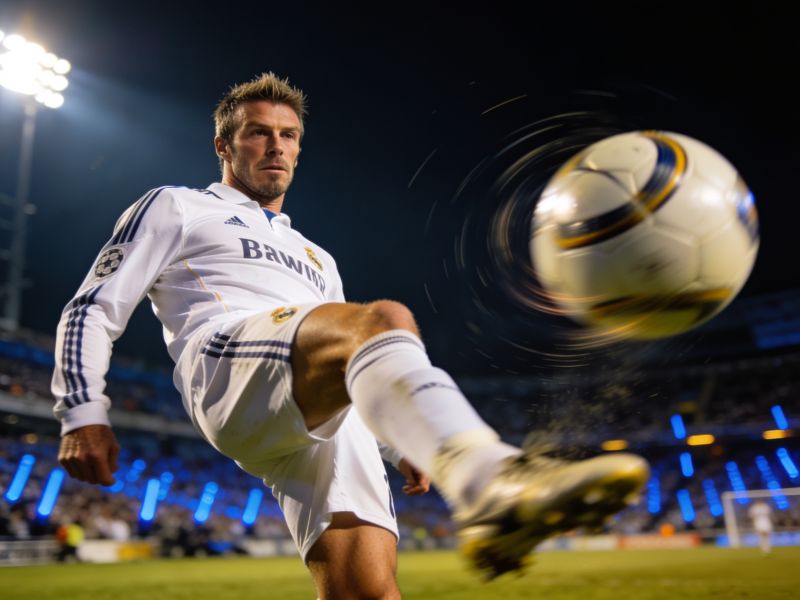
The quality of Beckham’s free kick came from control rather than raw power. He approached the ball with a measured rhythm, placed his standing foot carefully。and wrapped his right boot around the lower half of the ball. That contact created the familiar combination of curl and late drop. Television replays showed how little room the goalkeeper had to react once the ball cleared the wall. Beckham’s free kick looked almost slow in its opening flight, then accelerated away from the keeper’s reach. Players who copied the technique often focused on the visible bend, but the harder lesson was his consistency: the same compact run-up, the same body shape, and an extraordinary ability to repeat the strike.Beckham’s free kick reputation had been established before the Greece match, particularly during his Manchester United years. His deliveries were a regular source of danger from set pieces。while his crossing gave strikers chances even when he did not shoot. At United, supporters learned to read the position of the ball before Beckham began his run. A foul near the corner of the penalty area could produce a curling attempt at goal;a deeper infringement might bring a driven cross toward the near post. His range made defensive planning difficult. Opponents could not simply build a wall and wait for a shot, because Beckham could also bend the ball into the crowded six-yard box.That variety helped turn Beckham’s free kick into a global sporting image. On shirts, magazine covers and television montages, the raised right arm and angled follow-through became instantly recognizable. The public often remembers the cleanest goals, yet coaches tend to value the less dramatic details: the delivery that reaches a teammate’s forehead, the corner won after a deflection。or the repeated threat that forces defenders to avoid unnecessary fouls. Beckham’s free kick was a weapon because it changed the decisions made before the ball was struck. A defender stepping half a yard closer could concede a penalty;a goalkeeper moving toward the near post could leave the far corner exposed.
Modern football has produced specialists with different methods, but Beckham’s free kick still carries unusual cultural weight. His technique combined precision, theater and timing at a level few players have matched. The Greece goal remains the strongest evidence。not because it was his most spectacular strike, but because the circumstances gave every movement meaning. England needed a leader, the match was nearly over, and Beckham delivered with the calm of a player who had rehearsed the moment thousands of times. That is why Beckham’s free kick continues to appear in discussions about set-piece mastery: it was beautiful, decisive and, for one night, almost impossible to separate from the history of English football.